

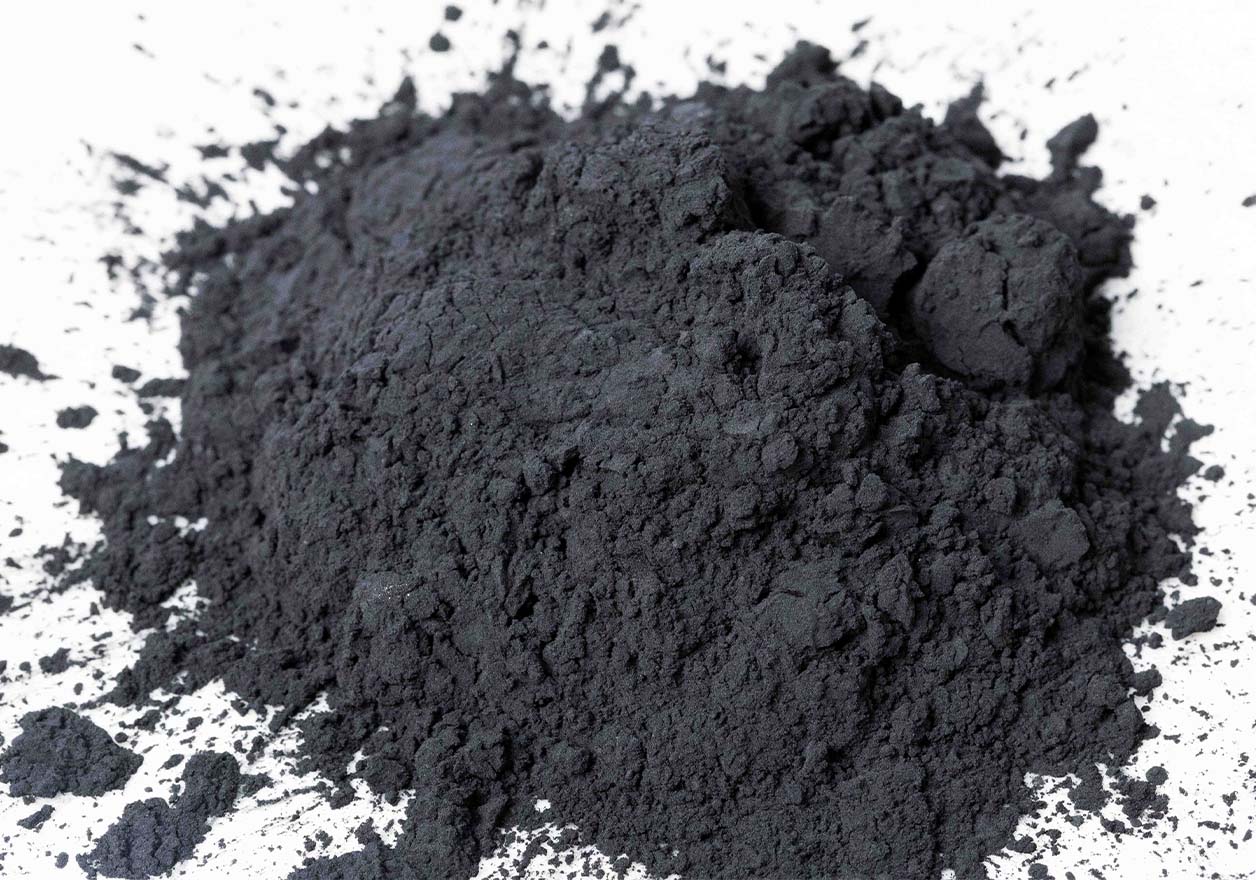
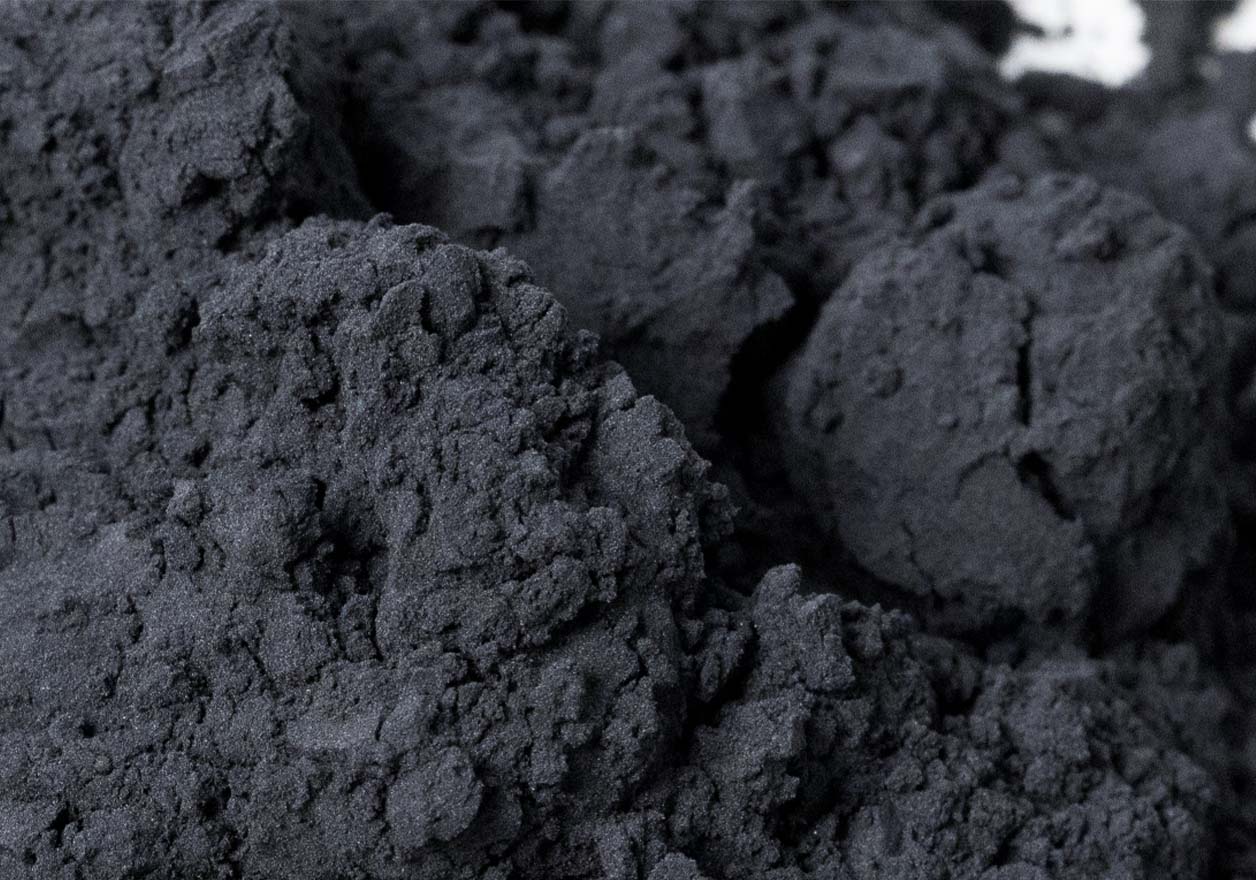
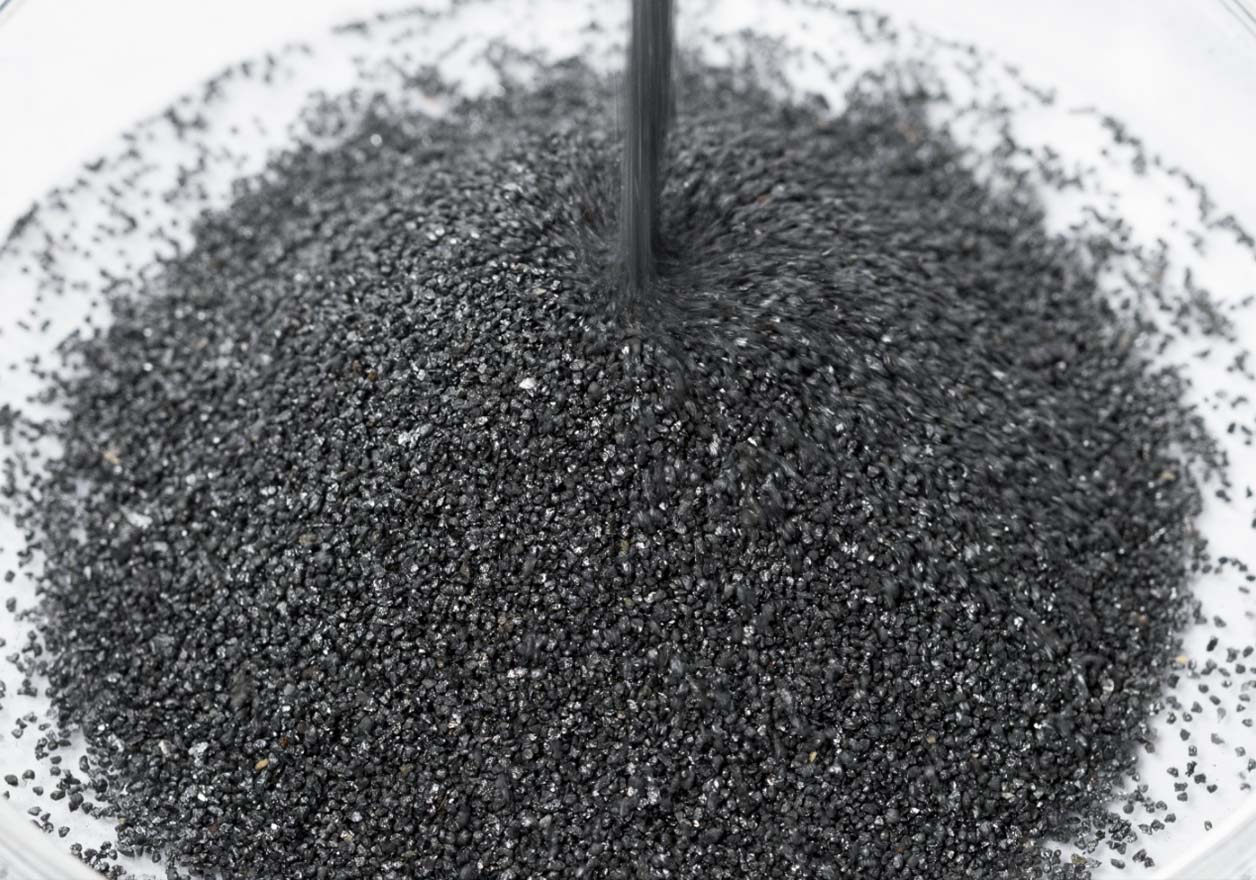
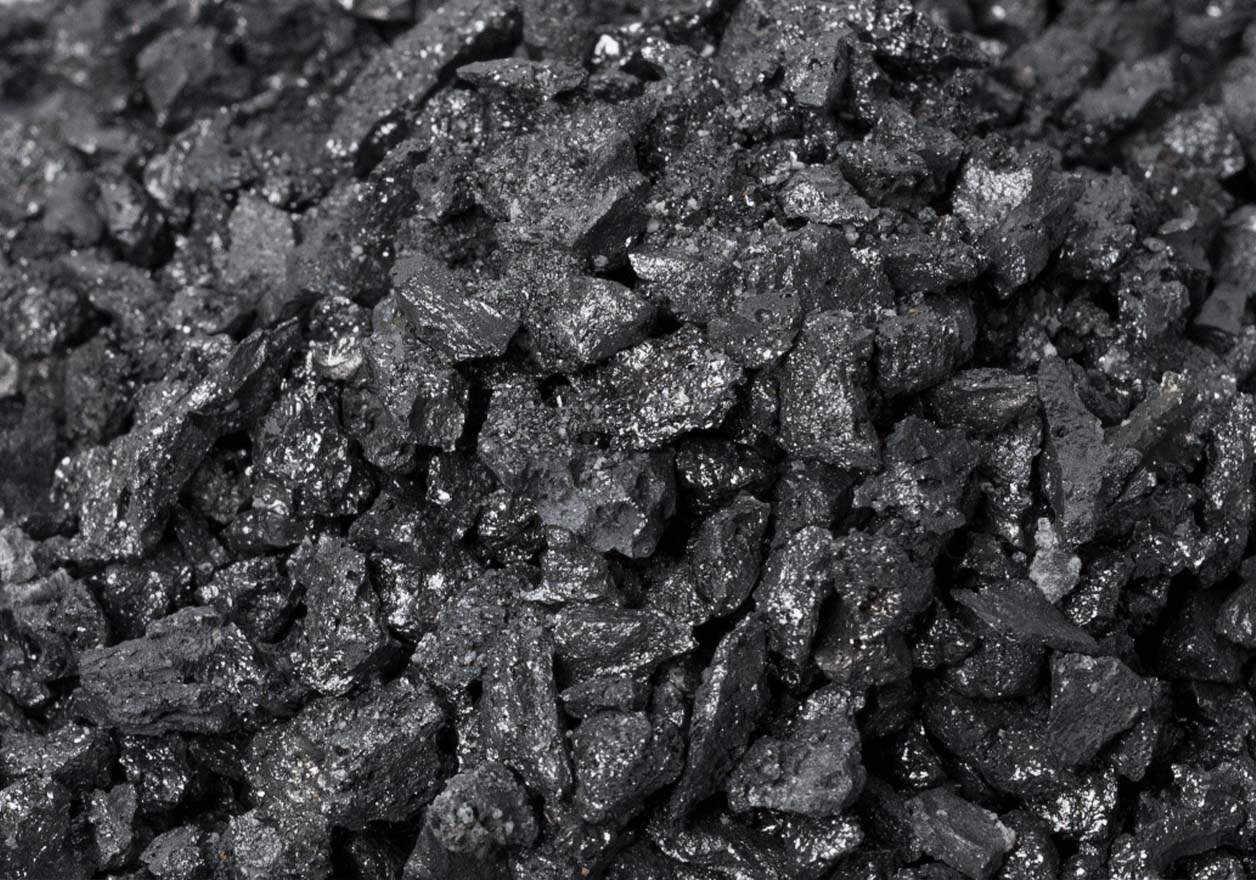
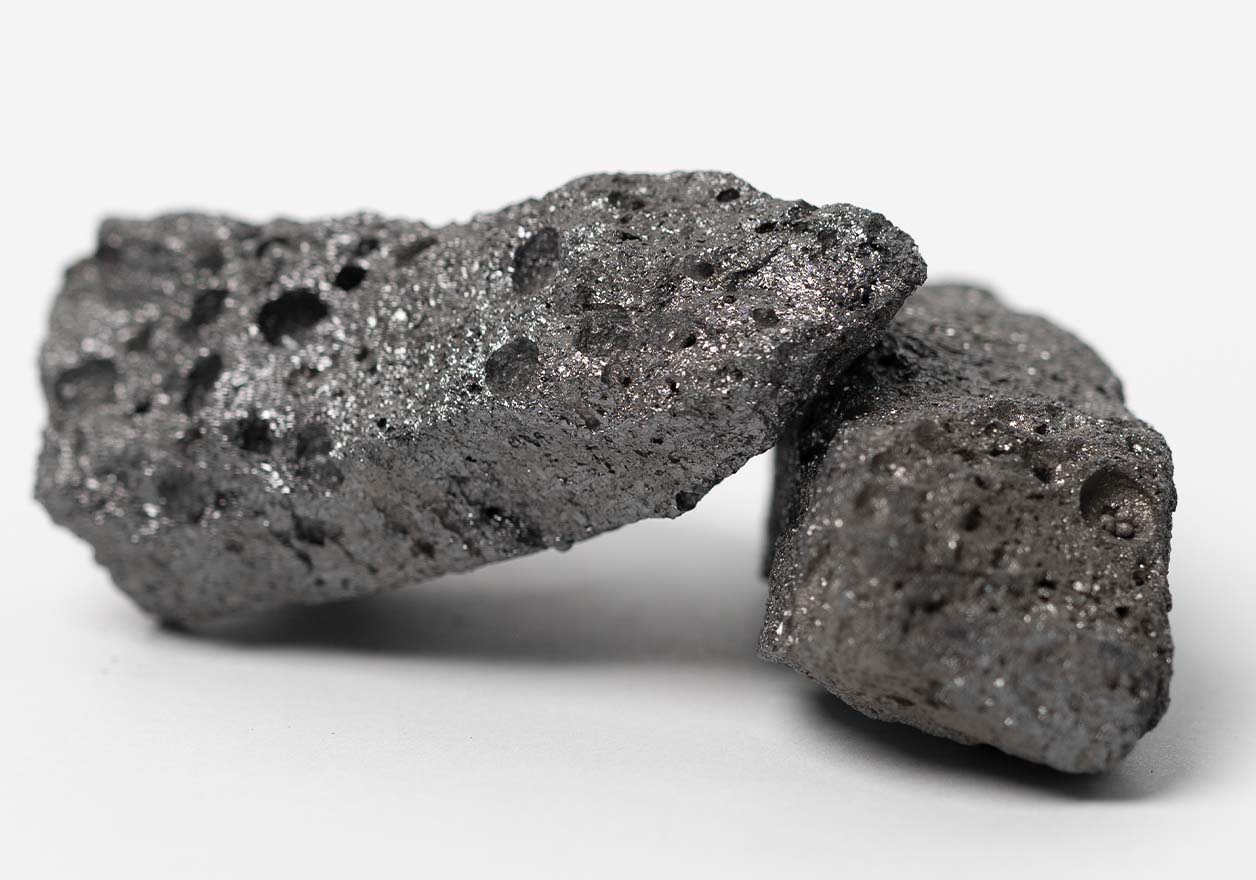
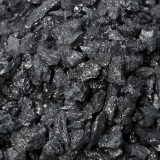
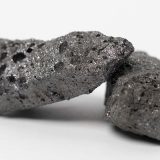


Boron carbide (B₄C), known as black diamond, is a gray-black micro‑powder. It is one of the three hardest known materials, with a Mohs hardness of 9.3, and is used in tank armor, bullet‑proof vests, nuclear power, abrasives, refractories and other industrial fields.
As an ideal neutron absorber, it absorbs large amounts of neutrons without producing radioactive isotopes. It provides low density, high strength, excellent high‑temperature stability, and strong chemical resistance, making it suitable for wear‑resistant materials, ceramic reinforcements, lightweight armor, and reactor neutron absorbers.
5D‑Materials boron carbide powder is made using proprietary technology, featuring a tight particle‑size distribution and uniform grains. With a B₄C content ≥98%, we supply powders meeting ANSI, JIS, and FEPA standards, and also support custom specifications.
Boron carbide (B₄C) is a boron‑carbon compound. Enriched ¹⁰B absorbs neutrons via an (n,α) reaction, producing helium and lithium and expanding in volume by ~20%—a key limitation known as irradiation swelling.
Its hexagonal‑rhombohedral crystal (c₀ = 1.212 nm, a₀ = 0.56 nm) holds twelve boron atoms at the corners and can accommodate atoms ≤0.18 nm, retaining lithium or hydrogen. It remains stable under irradiation when boron burnup is <8%.
Properties: density 2.51 g/cm³, melting point ~2450°C, thermal conductivity ~24 W/(m·K) at 200°C, linear expansion 4.5×10⁻⁶ K⁻¹ (20–800°C). Cost‑effective for control applications, it is made by vapor‑deposition or electro‑thermal methods. Available as powder, blocks, or dispersed in matrices for reactor use, its hardness and strength also suit abrasives and corrosion‑resistant parts.
| Molecular Formula | B₄C |
| Molar Mass | 55.25 |
| Density | 2.51 g/mL at 25 °C (lit.) |
| Melting Point | 2450°C |
| Boling Point | 3500°C |
| Water Solubility | Insoluble in water. |
| Appearance | Black lens |
| Specific Gravity | 2.51 |
| Color | Black |
| Mohs scale | 9.3 |
| Storage Condition | Room Temprature |
| Stability | Stable. Incompatible with oxidizing agents. |
| Sensitive | Easily absorbing moisture |
| Physical and Chemical Properties | Character gray-black powder. |
| melting point 2350 ℃ | |
| boiling point> 3500 ℃ | |
| relative density 2.52 | |
| Use | The powder is used as an abrasive material, the molded product can be used as an anti-wear material, and is also used in atomic nuclear reactors |
| Micropowder | JIS R6001-1998 | FEPA | Chemical Composition | |||||||||
| SIZE | D3(um) | D50(um) | D94(um) | SIZE | D3 | D50 | D94 | T.B | T.C | Fe | B+C | |
| #240 | 103 | 57±3 | 40 | 76-81% | 18.5-21% | ≤0.2% | ≥98.5% | |||||
| #280 | 87 | 48±3 | 33 | F230 | 82 | 53±3 | 34 | |||||
| #320 | 74 | 40±2.5 | 27 | F240 | 70 | 44.5±2 | 28 | |||||
| #360 | 66 | 35±2 | 23 | F280 | 59 | 36.5±1.5 | 22 | |||||
| #400 | 58 | 30±2 | 20 | F320 | 49 | 29.2±1.5 | 16.5 | |||||
| #500 | 50 | 25±2 | 16 | |||||||||
| #600 | 43 | 20±1.5 | 13 | F360 | 40 | 22.8±1.5 | 12 | |||||
| #700 | 37 | 17±1.3 | 11 | F400 | 32 | 17.3±1 | 8 | |||||
| #800 | 31 | 14±1 | 9 | |||||||||
| #1000 | 27 | 11.5±1 | 7 | F500 | 25 | 12.8±1 | 5 | |||||
| #1200 | 23 | 9.5±0.8 | 5.5 | F600 | 19 | 9.3±1 | 3 | |||||
| #1500 | 20 | 8±0.6 | 4.5 | |||||||||
| #2000 | 17 | 6.7±0.6 | 4 | F800 | 14 | 6.5±1 | 2 | |||||
| #2500 | 14 | 5.5±0.5 | 3 | |||||||||
| #3000 | 11 | 4±0.5 | 2 | F1000 | 10 | 4.5±0.8 | 1 | |||||
| #4000 | 8 | 3±0.4 | 1.3 | F1200 | 7 | 3±0.5 | 1(80%) | |||||
| #6000 | 5 | 2±0.4 | 0.8 | F1500 | 5 | 2±0.4 | 0.8(80%) | |||||
| #8000 | 3.5 | 1.2±0.3 | 0.6 | |||||||||
| Ultrafine powder | Ultrafine powder for ceramic manufacturing | Chemical Composition | ||||||||||
| Particle Size | D50(um) | T.B | T.C | Fe | B+C | |||||||
| W5 | 5±0.3 | 76-81% | 18-21% | ≤0.2% | ≥97.5% | |||||||
| W3.5 | 3.5±0.3 | |||||||||||
| W1.0 | 0.8±0.1 | |||||||||||
| W0.2 | 0.2±0.1 | |||||||||||
| Coarse grit | Specification | T.B | T.C | Fe | B+C | |||||||
| F4-F220 | 76-81% | 18-21% | ≤0.2% | ≥99.5% | ||||||||
Reviews
There are no reviews yet.